Wednesday, November 7, 2012

Slowest Shark ever Still Manages to Hunt Seals... Somehow

Swimming at speeds that have been compared to "crawling babies," the Greenland Shark is not exactly the image of deadly speed. Their approach appears slow and a little bumbling due to their blindness; if you don't believe me, check it out:


Yet, scientists have discovered that, somehow, they've been eating seals. Seals swim at twice their speed; they've been known to evade even Great White sharks, who often have to blast them from below in order to hunt healthy adults. So, how are the Greenland sharks getting fresh, live seal?

Though the theory has yet to be proven, there is a strong belief within the scientific community that the sharks have learned to ambush Arctic seals that are asleep in the water. Seals sleep in the water in the Arctic; the leader of the study suggests that the shark takes advantage of that and ambushes them from below when asleep. While it seems surprising that a slow, blind shark could accomplish anything resembling an ambush, we should keep in mind that encounters with this shark are rare, as it is a cold water, deep-sea animal that only swims to the surface at night to feed. We don't even know how they continue on as a species, let alone how they hunt.

Check out the complete article from National Geographic at this link!

Wednesday, October 31, 2012

The Fate of the HMS Bounty's Replica


We've all seen pictures and heard news stories about the damage of our Eastern seaboard by Superstorm Sandy. Apparently, it also claimed a ship of historical interest: a sailing vessel named HMS Bounty, which was a complete replica ship built in 1960 for a film about the original.

Pictured in Chicago for the Tall Ships Festival 2003
The story of the original Bounty is a story from 1789, when part of the crew mutinied against its captain and sent him and half the crew out to sea in a lifeboat. The lifeboat and some crewmen survived a 3600 nautical-mile journey; the ship, however, was intentionally set on fire after the crew landed on an island to avoid attracting the attention of the British Royal Navy.

The replica ship was built in 1960 as a complete, functional sailing ship for the movie "Mutiny on the Bounty" and also made an appearance in "Pirates of the Caribbean." Only days before Hurricane Sandy hit the eastern seaboard, the captain decided to sail the ship back to port to wait out the storm; unfortunately, it was caught in the middle when a generator blew. Fourteen crew members were rescued by Coast Guard helicopter; however, the captain and a crew member were washed overboard. The captain is still missing.

Take a walk through some distant and recent nautical history, and check out National Geographic's photo gallery about the ship's sinking, crew rescue, and original mutiny here.

Monday, October 8, 2012

Questions about Becoming a Professional Diver?

Is becoming a scuba diver one of those things that sat on your bucket list for years before you decided to take the leap and get certified? You may feel the same way about becoming a PADI pro now. Everyone asks themselves the same questions:

1. Can I handle the stress of a pro class?
2. Are my dive skills good enough to be a pro diver?
3. Am I ready to be responsible for other divers?
4. Can I afford to take the Divemaster or Instructor course?

1. Pro classes can be stressful, but the PADI Divemaster course (the first level of professional certification) is completed at your own pace. It gives you the time you need to tackle the skills and knowledge development at a pace you can handle while you still work your regular job or go to school. That way, by the time you are ready to tackle a PADI Instructor Development Course you've had plenty of time to prepare your skills.

2. Dive skill development is a top priority for every professional course. Practical exercises will dominate your course time, both in the pool and in open water. Current dive professionals will be there every step of the way to mentor you and help you practice your skills until you are comfortable demonstrating them to students.

3. Ultimately, you are the only one who can decide if you're ready to be responsible for newer divers. However, a good way to gauge your readiness is to evaluate how you felt once you completed your Rescue course. Did it feel good to accomplish the skills in the course, knowing that they will help you be a better buddy? If you haven't completed Rescue yet, that course is a great start because it gives you the tools to critically evaluate other divers and help them avoid potential problems (it's also really, really fun).

4. If you're concerned about the cost of the courses, you should come to Sea and Discover at Scuba Emporium on Wednesday, October 24 at 6:30pm. That night, not only will we have manufacturer representatives from both Aqualung and Sealife Cameras, we will also have Gary Joyce from PADI here to respond to any questions or concerns you have that didn't get addressed here. We'll also offer special, one-night-only deals on course packages for recreational and professional divers that will feature interest-free financing! These courses have never been more affordable, and the costs can be managed over a period of time instead of paying for everything up front.

Call us today to register; we'll make sure we have food for you!


Wednesday, October 3, 2012

Dive the Great Barrier Reef... From Your Computer!

Is it the same as putting your equipment on and descending to the Great Barrier Reef? Maybe not, but it will bring everyone who hasn't tried scuba a little closer to the ocean.

Google Maps released a new extension of its panoramic "street view" feature. You can now get a turtles-eye view of a few amazing dive spots, like Australia's Great Barrier Reef or Maui's Molokini Crater. They've partnered with Catlin Seaview Survey, a company whose ambitions include mapping the world's reefs using panoramic imaging systems. Their belief is that the Google images will bring people closer to the oceans, since many people do not have access to beautiful reefs or scuba equipment. They also hope to track the effects of climate change over years using the images, as they will be able to compare them with the state of the reefs in the future.

Check out their photo gallery by clicking here! You can also see what they've done so far by clicking the link to Catlin Seaview Survey's website above or checking it out on Google's street view feature.

Monday, September 17, 2012

So, Why Can't Customers Buy Regulator Parts Kits?

Now that many dive shops and manufacturers are moving their sales online, the question I've seen posed by many is, why won't manufacturers sell the parts kits for their regulators directly to the consumer? It seems like a natural conclusion to online sales; the customer purchases a regulator online. Why shouldn't they be able to purchase the kits to repair it as well?

The answer to that question actually begins at the manufacturer's responsibility to the consumer. The reason manufacturers generally require yearly service on their regulators is to ensure that the regulators are in good working condition. So, they train technicians through local dive shops to take them apart properly and examine the regulators' moving parts. Though regulators themselves are generally very durable, the o-rings and diaphragm are made of parts that degrade, much like the belts in your car's motor. Thus, the regulators require new parts from the manufacturer periodically. Even if you only dive once or twice a year, these parts will harden with age like any other rubber product.

Enter the Local Dive Shop. As a shop with a Repair Department, I've seen what it takes to properly disassemble and reassemble a regulator, and to tune it. I can safely say that you probably don't have one in your basement. The regulators have to be tested at a testing station with air pressure to ensure proper function, and many regulators have face plates that require special tools to remove. Manufacturers do not direct-sell their parts kits because it becomes a huge liability to both the dive center and the manufacturer if someone takes their reg apart, pulls out the o-rings, puts it back together and misses something or cracks the housing in a way that causes it to malfunction. It's the same reason you can't fill your tank from the tire compressor in your garage; you breathe off it. If we sell you a parts kit, you install it and your regulator free-flows at fifty feet, whose fault is it? Was it your installation, or was it a faulty kit? The list goes on.

At the end of the day, the repair kit policy is the only means by which a manufacturer can ensure proper function and maintenance of the products they stand by. And keep in mind, these units are designed to keep you alive in a foreign environment. Wouldn't you want someone who checks them for a living to make sure it's in good condition, inside and out?

Monday, September 10, 2012

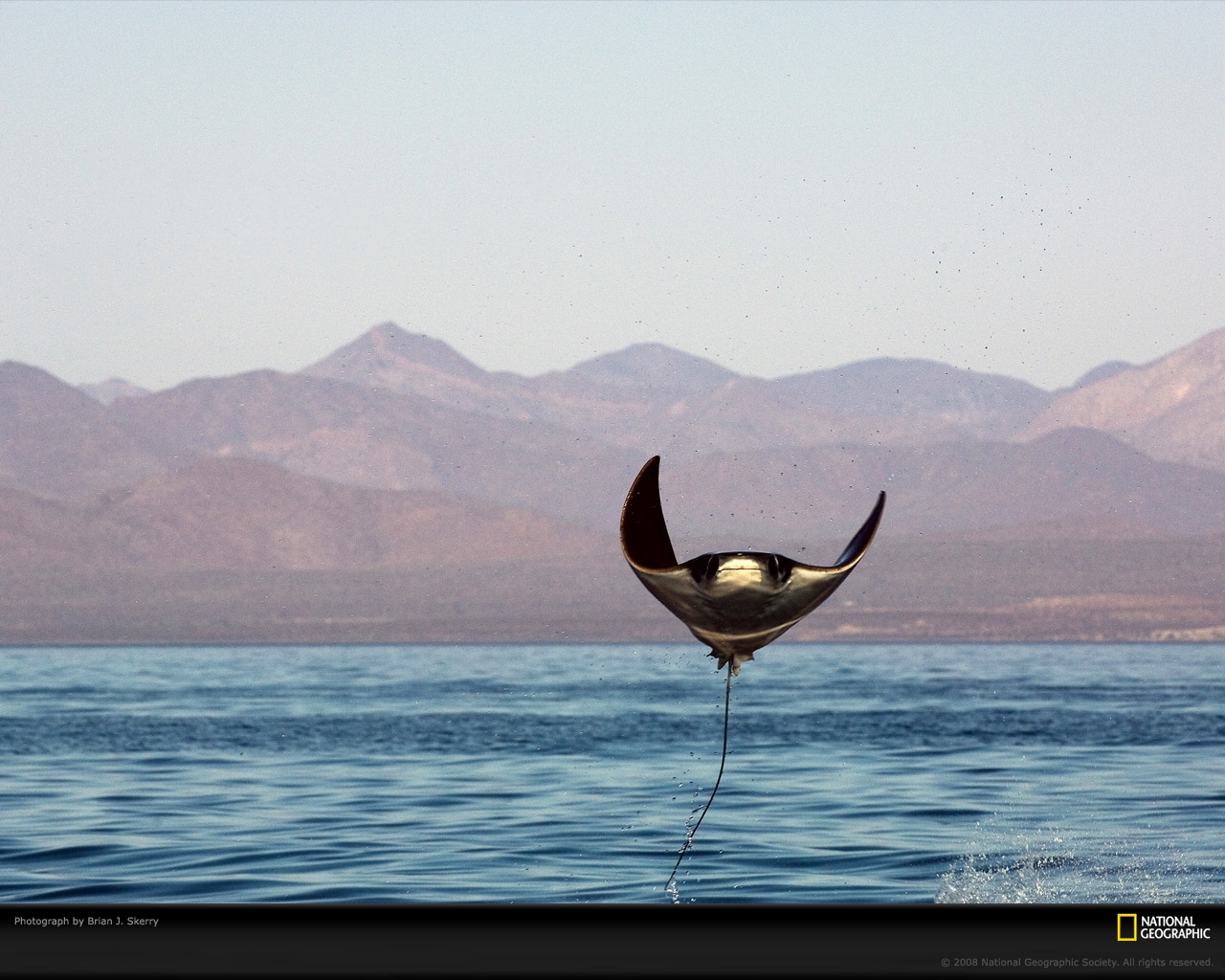
Holy Flying Mantas, Batman!

Did you know that manta and mobula rays can leap out of the water up to 9 feet into the air?

http://www.dailymail.co.uk/news/article-1298362/Flying-giants
Most people seem to think it's an impulse to remove parasites, although there are theories that males use the leaps as an effort to attract females or to alert others to the presence of predators. It's a rare sight to document, as rays are migratory and often move across vast areas of ocean. Their graceful movements underwater translate well in the open air, where they flap their fins in a manner reminiscent of flight.

A photo by one of the best underwater photographers, Brian Skerry

Unfortunately for these animals, their species has been listed as 'vulnerable' by the International Union for the Conservation of Nature. They are being overfished for their gill rakers, the membranes in their gills that filter the plankton they feed on. There are dubious claims in traditional forms of Chinese medicine that they strengthen the immune system, can assist in the resolution of kidney problems, and are touted as a general cure-all (much like the shark fin). There is a widespread belief that migratory ocean animals do not get cancer and diseases like humans do, so consuming their meat should be good for you. Unfortunately, most large oceanic animals are no longer safe for consumption at all, as the levels of mercury and chemical by-products in these animals has steadily increased in the last several years.

Don't succumb to an "out of sight, out of mind" mentality; just as you may never have known that these manta and mobula rays can leap out of the water, you might not have known until now that they are in danger of extinction due to irresponsible fishing practices.

Go to Project AWARE's website to learn what action is being taken to save these animals, from legislation to island community organizing and the creation of marine sanctuaries. And take action yourself! Don't be silent in your opposition to unsustainable fishing practices. Raise awareness, sign reputable petitions such as the petition through Project AWARE, and learn more about the successes of these measures and how they benefit the animals.


Thursday, August 30, 2012

Track Your Freshwater Consumption!

One of the projects we should be focused on, not just as divers but as human beings, is the state of our fresh water resources. We at Scuba Emporium are fortunate to live near the greatest natural freshwater resource on the planet: the Great Lakes. However, if this drought has taught Americans anything, it's that our freshwater lakes and rivers are precious commodities. 

Lots of smaller lakes and rivers in the Midwest are closed to swimming due factors such as shrinking shorelines creating drowning hazards and bacteria buildup from lack of fresh water circulation. Other human-related issues include fertilizer runoff encouraging algae blooms and plain ol' sewage. What can we do in the face of our shrinking drinkable water supply?

Use less water!

I found a great resource for tracking your personal water consumption! It's available at the following link: 


This is a great tool to examine your own impact on our freshwater resources and generates helpful tips to use less water. It even offers a 'pledge' option at the end, where (if you want) you can commit to shrinking your water usage. Try it today; you'll be amazed at the unexpected ways you use water.
http://ecofuture.net/greenslogans/slogans-on-save-water/62/